
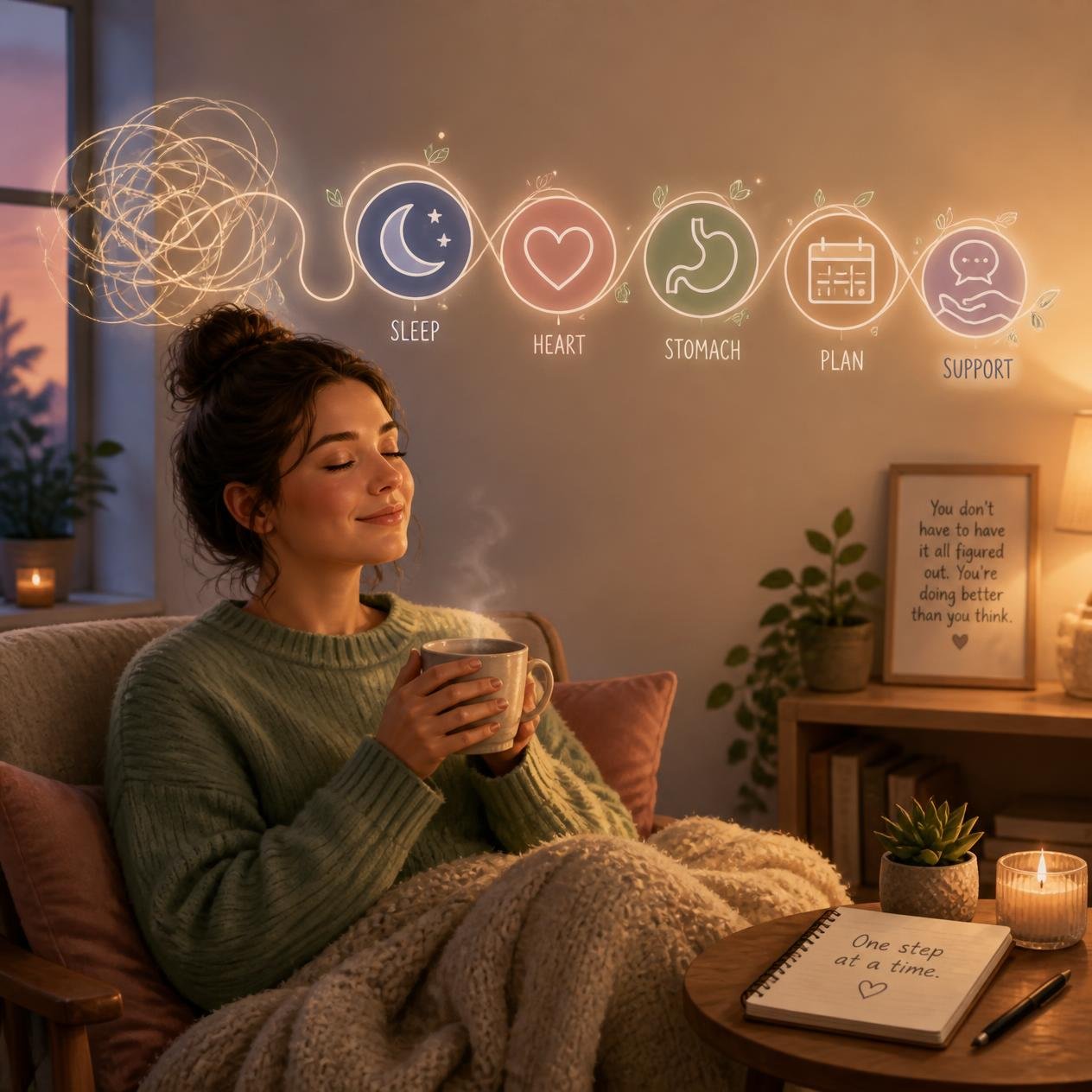
Anxiety is one of the most common reasons people seek counseling—and one of the most misunderstood. For some, anxiety shows up as constant worry and “what if” thoughts. For others, it’s physical: a racing heart, tight chest, stomach problems, or feeling on edge all day. Many people tell themselves they should be able to “calm down,” push through, or just ignore it. But anxiety isn’t a character flaw. It’s often a nervous system response to stress, uncertainty, past experiences, or ongoing pressure.
This article covers the basics: what anxiety is, common signs, possible causes, and how to know when it’s time to get professional support.
What Is Anxiety?
Anxiety is the body and mind’s alarm system. It’s designed to protect you—helping you notice danger, prepare for challenges, and respond quickly. In small doses, anxiety can be helpful (like motivating you to study for a test or prepare for a meeting).
Anxiety becomes a problem when the alarm system starts going off too often, too intensely, or in situations that don’t truly require it. When that happens, people may feel stuck in patterns of worry, avoidance, overthinking, reassurance-seeking, or physical stress symptoms that start to interfere with daily life.
Common Signs of Anxiety
Anxiety can look different from person to person. Some people appear “high functioning” on the outside while feeling overwhelmed internally.
Emotional and Mental Signs
Excessive worry that feels hard to control
Overthinking, replaying conversations, or fearing worst-case scenarios
Irritability or feeling unusually impatient
Feeling restless, on edge, or unable to relax
Difficulty concentrating (your brain feels “busy” or scattered)
A sense of dread, like something bad is about to happen
Perfectionism or fear of making mistakes
Needing constant reassurance (from others, the internet, or repeated checking)
Physical Signs
Tightness in the chest, throat, jaw, or shoulders
Racing heart, palpitations, or feeling “wired”
Shortness of breath or shallow breathing
Stomachaches, nausea, diarrhea, appetite changes
Headaches or muscle tension
Trouble sleeping (falling asleep, staying asleep, waking early)
Fatigue (anxiety is exhausting)
Sweating, trembling, or feeling shaky
Behavioral Signs
Avoiding people, places, or tasks that trigger anxiety
Procrastination (often rooted in fear, not laziness)
Over-preparing, over-researching, or repeatedly checking things
Difficulty making decisions or constantly second-guessing
Overworking or staying busy to avoid feelings
Using food, alcohol, scrolling, or other habits to numb or escape
Panic Attacks vs. General Anxiety
Many people experience intense anxiety that spikes suddenly, sometimes called a panic attack. Panic attacks can include:
racing heart
chest tightness
dizziness
nausea
numbness/tingling
feeling detached or unreal
fear you might faint, lose control, or die
Panic attacks are terrifying, but they are treatable. If you’re having chest pain, fainting, or symptoms you’ve never experienced before, it’s wise to rule out medical causes first.
What Causes Anxiety?
Anxiety rarely has one single cause. It’s usually a combination of factors, including:
1) Stress and Overload
When life becomes too demanding—work pressure, financial stress, caregiving responsibilities, school demands, health concerns—your body may stay in a constant state of readiness. If your nervous system doesn’t get enough recovery time, anxiety can become chronic.
2) Genetics and Temperament
Some people are naturally more sensitive, vigilant, or “highly aware.” That sensitivity can be a gift, but it also may make you more vulnerable to anxiety, especially in high-pressure environments.
3) Past Experiences and Trauma
Anxiety can be connected to experiences that taught your body the world isn’t safe—bullying, medical scares, unpredictability at home, emotional neglect, or more obvious trauma. Even if you mentally know you’re safe now, your body may still react as if danger could return at any moment.
4) Thought Patterns and Learned Coping
Over time, we develop mental habits:
catastrophizing (“This will be a disaster”)
mind-reading (“They think I’m incompetent”)
all-or-nothing thinking (“If I can’t do it perfectly, I shouldn’t do it”)
We also learn coping strategies—like avoidance or over-control—that bring short-term relief but often make anxiety stronger long-term.
5) Lifestyle and Health Factors
Sleep deprivation, too much caffeine, low nutrition, minimal movement, hormonal shifts, some medications, and medical conditions (like thyroid issues) can intensify anxiety. This doesn’t mean anxiety is “just physical,” but it does mean the body matters in treatment.
6) Spiritual Pressure and Shame (for some)
For many people of faith, anxiety can be complicated by guilt: “Why am I anxious if I trust God?” When anxiety is treated like a spiritual failure, shame grows—and shame fuels anxiety. A healthier approach is to hold both truths: faith can be a powerful support, and anxiety can still be a real mental health struggle that deserves care.
When Is Anxiety “Normal”—and When Is It Time to Get Help?
It’s normal to feel anxious during major transitions or stressful seasons. Consider seeking counseling if anxiety is:
Persistent
Worry most days for weeks or months
A sense that you can’t “turn your brain off”
Disruptive
Interfering with sleep, work, relationships, school, or parenting
Causing avoidance (you stop doing things you value)
Physically draining
Frequent tension, headaches, stomach issues, or fatigue
Panic attacks or constant “on edge” feelings
Shrinking your life
You’re saying no to opportunities, connection, travel, responsibility, or joy because of fear
Affecting relationships
Increased conflict, irritability, reassurance-seeking, or withdrawal
Feeling misunderstood or alone in what you’re carrying
Connected to trauma
Triggers, flashbacks, hypervigilance, or feeling unsafe in situations that “should” feel safe
Accompanied by depression or hopelessness
Low mood, numbness, or thoughts like “I can’t do this anymore”
If you’re experiencing thoughts of self-harm, call 988 (U.S.) or seek emergency support immediately.
What Does Counseling for Anxiety Look Like?
Effective anxiety counseling is not just “talking about stress.” It’s learning how your anxiety works—and practicing skills that help you respond differently.
Depending on your needs, therapy may include:
Identifying triggers and patterns (what sets anxiety off and what keeps it going)
Body-based regulation skills (breathing, grounding, relaxation, nervous system recovery)
Cognitive strategies to interrupt spirals and challenge fearful predictions
Exposure work (gently reducing avoidance and building confidence)
Boundary and communication skills (especially if anxiety is tied to people-pleasing or conflict)
Trauma-informed care if anxiety is rooted in past events
Faith-integrated support when desired—blending clinical tools with Christian values, prayer, and meaning-making without shame
A good therapeutic goal isn’t to “never feel anxious.” It’s to reduce how intense it gets, how long it lasts, and how much it controls your life.
A Simple Starting Point: 3 Steps You Can Try This Week
If you’re not sure where to begin, start here:
Name the pattern.
Write down: When does anxiety spike? What happens in your body? What do you do next (avoid, overthink, check, seek reassurance)?Practice a daily downshift.
Choose one 5–10 minute calming practice each day: slow breathing, a walk, stretching, journaling, or a short guided relaxation.Reduce one avoidance.
Pick one small thing you’ve been avoiding and take a gentle step toward it. Confidence grows through action, not just insight.
When to Consider Additional Support (Medical or Psychiatric)
Counseling helps many people significantly, but sometimes anxiety is severe or complicated by health factors. Consider talking with a medical provider if:
panic attacks are frequent
sleep is consistently disrupted
you can’t eat well due to anxiety
symptoms are escalating quickly
you suspect a medical contributor (thyroid, hormones, medications)
Medication isn’t right for everyone, but for some it provides enough stabilization to engage therapy skills more effectively.
Ready for Support?
If anxiety is interfering with your sleep, relationships, work, or peace of mind, you don’t have to manage it alone. Counseling can help you understand your triggers, strengthen coping skills, and create a plan that fits your life and values.
Schedule an initial consultation with Restoring You Christian Counseling:
Call: 443-860-6870
Book online: https://book.carepatron.com/Restoring-You-Christian-Counseling/Elisha?p=F869i2fsQCahi2s-K3afuw&s=6ZZMlbpB&i=XgXzcJJJ
Educational content only; not a substitute for professional medical or mental health care. If you are in crisis or considering self-harm, call 988 (U.S.) or seek emergency help immediately.