




Those who get counseling support and are in the process of dealing with trauma realize that it is a process. It is quite often a marathon, not a sprint. Traumatic events can affect emotional, mental, physical, and spiritual well-being.

Exhausted, anxious, and feeling hopeless? Burnout, depression, and anxiety share many symptoms, making it hard to know what you're really experiencing. Learn the key differences between these three conditions and discover practical steps toward healing and restoration.
Depression can make even the strongest faith feel distant. Discover how faith-informed counseling can help you navigate hard seasons with compassion, practical support, and renewed hope—without minimizing what you’re experiencing.
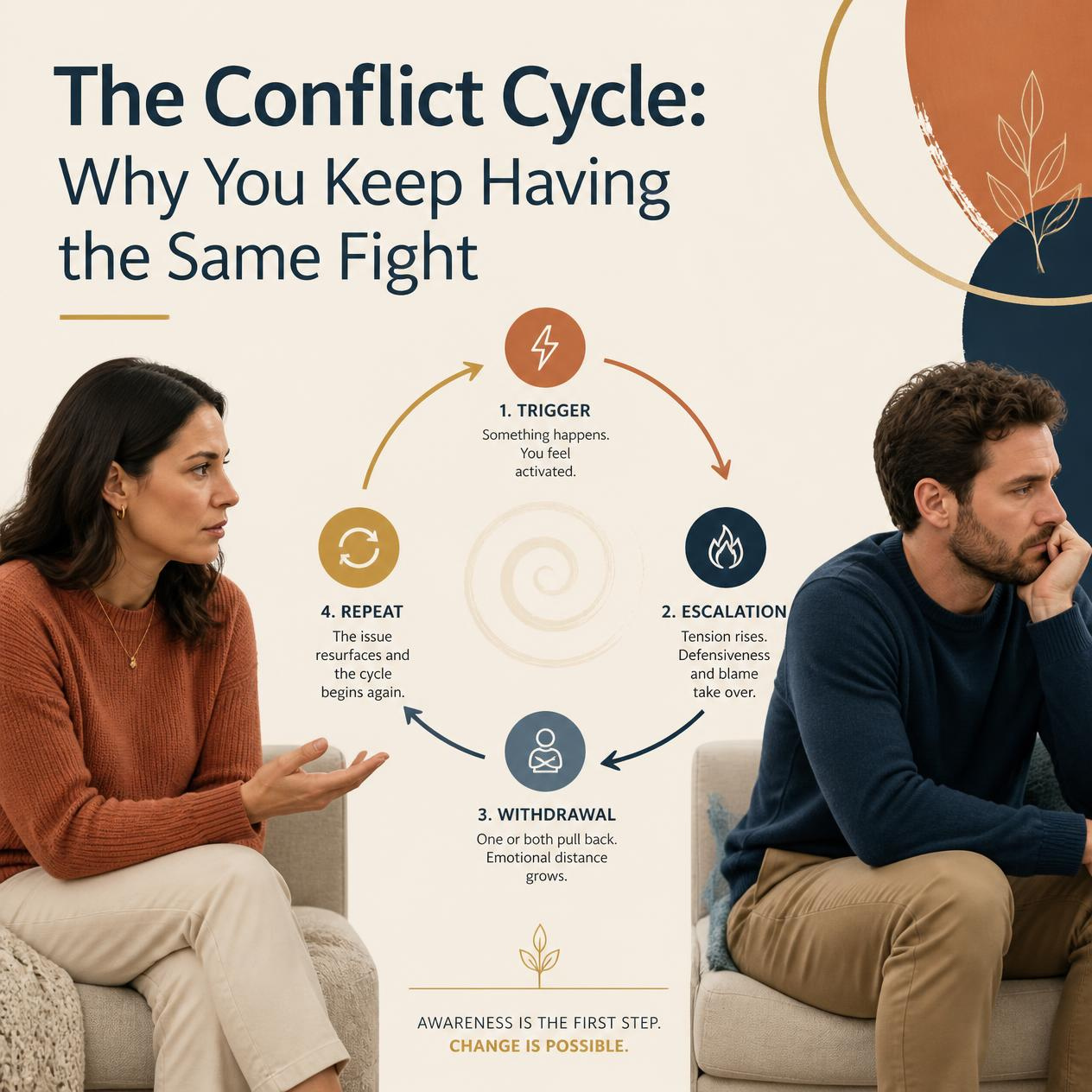
Why do you keep having the same fight—no matter how many times you promise it’ll be different? This post explains the “conflict cycle,” how it forms, and why your reactions can unintentionally reinforce the pattern. Learn how to spot the cycle, slow down escalation, and take practical first steps toward healthier communication and repair.
Trauma triggers can feel like an unexpected storm, leaving you breathless and overwhelmed. But understanding why they happen is the first step toward reclaiming your peace. In this post, we explore the science behind triggers, practical grounding techniques, and how faith-based counseling can help you move from surviving to thriving.