



Exhausted, anxious, and feeling hopeless? Burnout, depression, and anxiety share many symptoms, making it hard to know what you're really experiencing. Learn the key differences between these three conditions and discover practical steps toward healing and restoration.
Hope in Hard Seasons: Faith-Informed Support for Depression
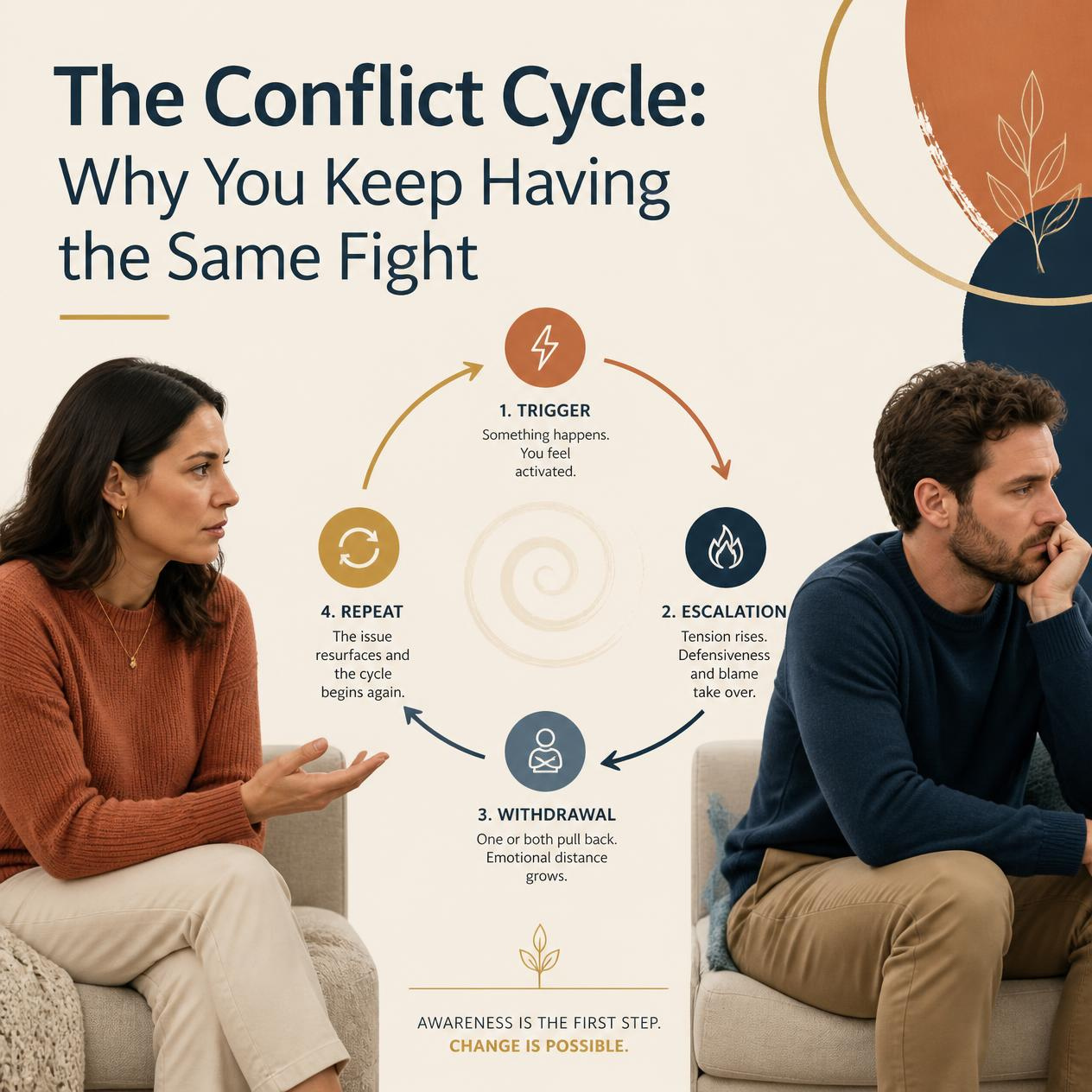
The Conflict Cycle: Why You Keep Having the Same Fight
Why do you keep having the same fight—no matter how many times you promise it’ll be different? This post explains the “conflict cycle,” how it forms, and why your reactions can unintentionally reinforce the pattern. Learn how to spot the cycle, slow down escalation, and take practical first steps toward healthier communication and repair.
A "Worry Window": How to Contain Overthinking
Depression and Irritability: When Sadness Shows Up as Anger
Depression doesn’t always look like tears and sadness—it can show up as irritability, impatience, and anger that feels out of proportion. In this post, we’ll explore why depression can make you more reactive, how it affects your relationships, and practical steps to find relief and respond with more clarity and compassion.
Self-Care That Works: The Vital Difference Between Relief and Recovery
Counseling Intensives: Months of Progress in Days, Not Years
The Body First Path to Calm: Breathing and Muscle Relaxation Techniques
Shame, Grace, and Mental Health: From Condemnation to Support
Shame can trap us in silence and self-condemnation, making anxiety, depression, and loneliness feel even heavier. This post explores the difference between shame and healthy conviction, how grace reshapes our inner dialogue, and practical steps—faith-based and clinical—to move toward healing, support, and lasting hope.
Panic Attacks Explained: Symptoms and Counseling Help
Panic attacks can feel terrifying and overwhelming, but they’re also treatable. In this post, you’ll learn common symptoms, why panic happens, and practical grounding and breathing tools to calm your body in the moment. We’ll also explore how counseling can help you understand triggers, reduce fear of future attacks, and build lasting confidence and peace.


